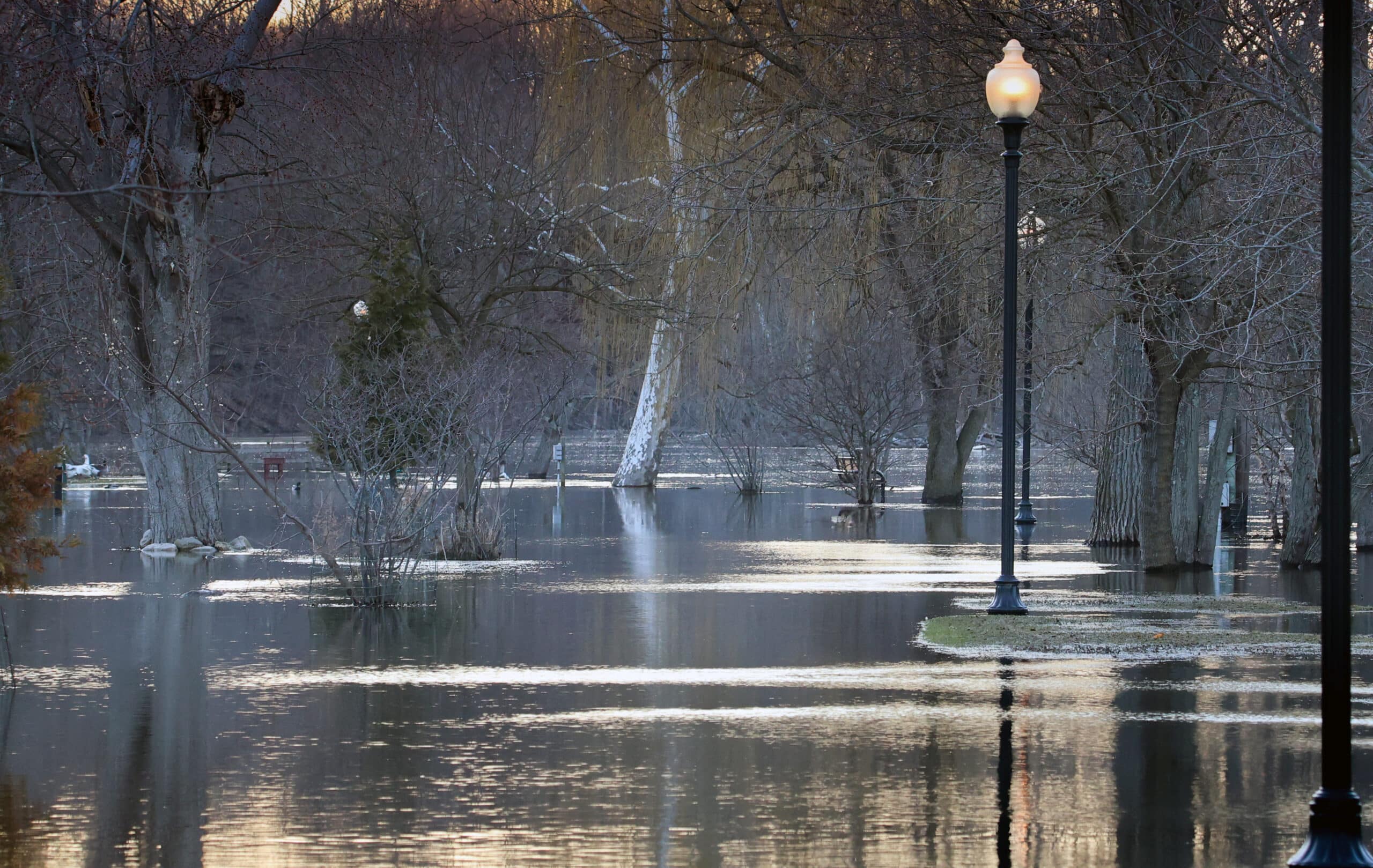
Over the past month, Michigan has seen a dramatic shift in conditions. What was recently considered drought territory has quickly turned into widespread saturation, with heavy rainfall and melting snow overwhelming the ground’s ability to absorb water.
When this happens, the risks for homes and businesses go far beyond typical basement flooding. Water begins to impact entire properties, from foundations and crawl spaces to commercial buildings and infrastructure. For property owners, understanding how to respond is critical to preventing long-term damage.
At John Grace, we’re already experiencing the effects of these conditions across Michigan. And we’ve been on site helping to restore damaged properties where the worst has happened from storms, flooding, and tornadoes.
Why Saturated Ground Changes the Risk
When the soil becomes fully saturated, water has nowhere to go. Instead of being absorbed, it begins to:
- Push against foundations and basement walls
- Enter crawl spaces and lower levels
- Pool around buildings and seep through cracks
- Overwhelm drainage systems and sump pumps
- Affect commercial buildings with flat grading or large footprints
This kind of flooding is often slower and more widespread, which makes it especially dangerous. Damage may not appear all at once, but it continues to worsen over time.
Flooding Isn’t Always Obvious at First
One of the biggest challenges with widespread water events is that the damage isn’t always immediate or easy to see. Instead, it often develops gradually. Property owners may begin to notice damp flooring or carpeting, musty odors that become more noticeable over several days, or subtle warping and discoloration in walls and trim. In some cases, water may begin to appear in areas that don’t typically experience flooding, along with an overall increase in indoor humidity.
By the time these signs become apparent, moisture has often already spread into hidden areas such as behind walls or beneath flooring, where it can continue to cause damage if not properly addressed.
What To Do If Your Property Has Flooded
Whether you’re dealing with a residential property or a commercial building, the first steps you take matter. Acting quickly can reduce damage and prevent more serious issues like mold.
1. Prioritize Safety
- Avoid standing water near electrical sources
- Shut off power if water has entered the structure
- Watch for structural damage or unstable surfaces
2. Stop the Source (If Possible)
- Address active leaks or water entry points
- Ensure sump pumps are functioning
- Redirect water away from the building if safe to do so
3. Document the Damage
- Take photos and videos of affected areas
- Record damaged items and materials
- Keep receipts for any emergency expenses
4. Begin Drying Immediately
Water that sits for more than 24 to 48 hours significantly increases the risk of mold. Professional drying is often needed to reach subflooring, wall cavities, insulation, and hidden structural areas.
5. Call a Restoration Professional
Widespread flooding often requires more than basic cleanup. At John Grace we make sure that moisture is fully removed and your property damage is properly addressed in a timely manner.
Why Proper Drying Matters More Than Cleanup
One of the most common mistakes after flooding is assuming that once visible water is removed, the problem has been resolved. In reality, hidden moisture is often the greatest threat. Without proper drying, mold can begin to grow within days, structural materials may start to weaken, and persistent odors can develop. Over time, this unseen moisture can also cause damage to spread beyond the originally affected area. That’s why professional drying equipment and moisture detection tools are essential to fully restore the space and prevent long-term issues.
How John Grace Helps Restore Flooded Properties
At John Grace, we take a comprehensive approach to flood recovery. Our team handles both the immediate response and the full restoration process, so property owners don’t have to manage multiple contractors. Our services include:
- Free inspections and moisture assessments
- Emergency water extraction
- Structural drying and dehumidification
- Mold remediation if needed
- Contents pack-out and cleaning
- Full repair and reconstruction
Because we manage the process from start to finish, we make sure nothing is missed and recovery stays on track.
Don’t Wait for Water to Get Worse
With ground conditions already saturated across Michigan, additional rain or melting can quickly lead to more flooding. Even properties that don’t typically experience water issues may be at risk. If you’ve noticed dampness, water intrusion, or changes in your building, it’s worth having it checked now before the damage spreads further.
We offer free inspections for homes and businesses across West and Southwest Michigan, including the Grand Rapids, Muskegon, and Kalamazoo areas. Our team can identify hidden moisture, assess the situation, and help you take the next steps with confidence.
Protect Your Property as Conditions Change
Flooding doesn’t always happen all at once, and it doesn’t always look dramatic. In many cases, it’s gradual, hidden, and easy to overlook until it becomes a much bigger issue. Staying aware and acting early can make all the difference.
If you need help now or want peace of mind as conditions continue to change, contact John Grace today.