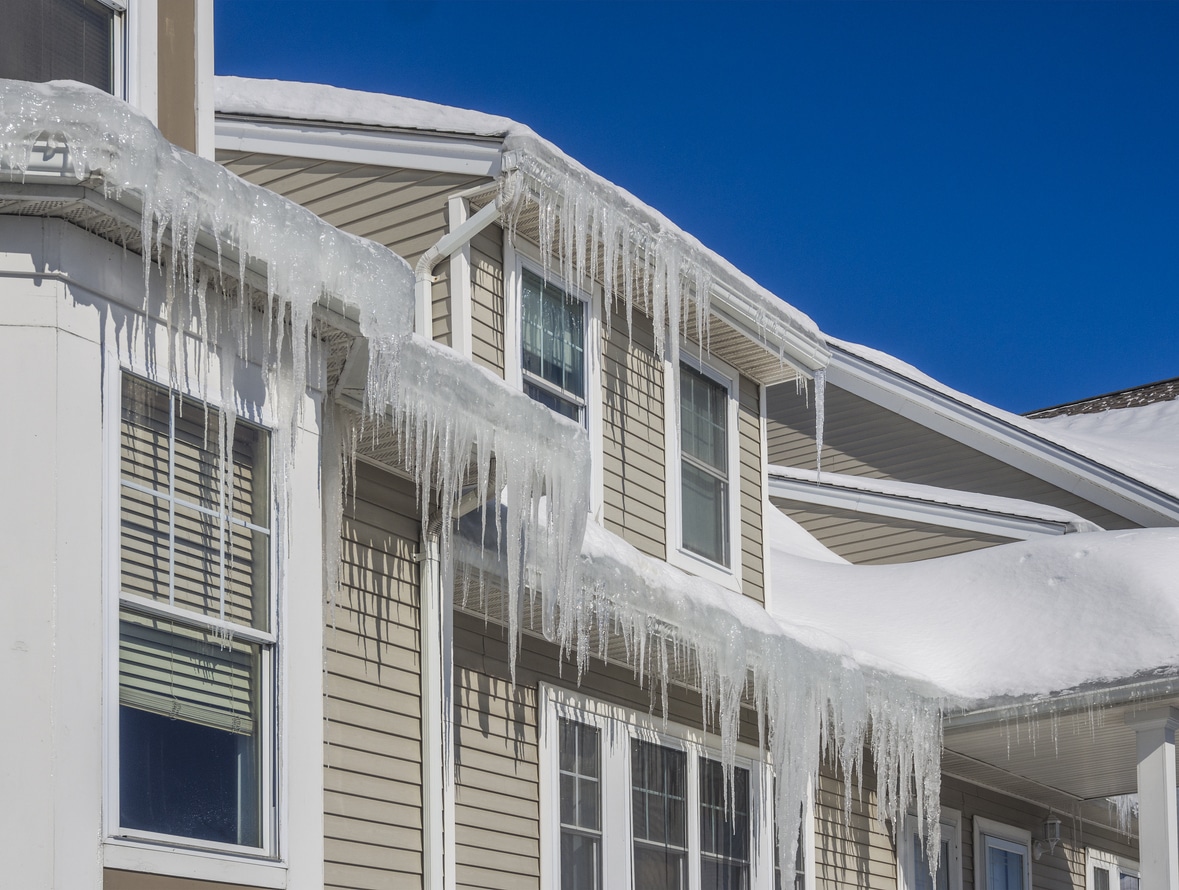
As winter sets in, Michiganders prepare for freezing temperatures and heavy snowfall. While snow can be picturesque and exciting, it can also lead to a common homeowner headache: ice dams. These heavy accumulations of ice form along the edges of roofs, preventing melting snow from properly draining, and often cause significant damage to the home. At John Grace, we know firsthand the problems ice dams can cause, and we’re here to help you understand what they are, how to prevent them, and what to do if they begin to form on your roof.
What Are Ice Dams and How Do They Form?
Ice dams form when the snow on your roof begins to melt due to heat escaping from your home. As the melted snow flows toward the colder edges of the roof, it refreezes, creating a barrier of ice. Over time, this dam of ice prevents additional melting snow from draining off the roof. The trapped water can seep into your house under the shingles and cause damage to your roof, insulation, ceilings, and walls, including potential mold growth.
Certain conditions lead to the formation of ice dams. First, heat must escape through the roof, typically because of poor insulation or ventilation in the attic. There must also be heavy snowfall followed by fluctuating temperatures. A freeze-thaw cycle, where daytime melting is followed by nighttime refreezing exacerbates the problem.
Some types of homes are more prone to ice dams due to their design, age, and insulation or ventilation issues. These include: older homes with poor insulation, especially homes with outdated or insufficient weatherproofing materials in the roof structure, homes with complex roof designs like roof valleys or dormer windows, and homes with heated spaces close to the roof.
How to Prevent Ice Dams
Homeowners need to take proactive measures to prevent ice dams from forming. Specifically, they must keep the roof cold and facilitate proper snowmelt drainage. Here’s how to reduce the risk:
- Proper Attic Insulation: A well-insulated attic minimizes heat loss and helps maintain a consistent roof temperature.
- Roof Ventilation: Adequate ventilation allows cold air to circulate under the roof, maintaining its temperature and preventing premature melting. Ridge and soffit vents are also effective options.
- Clean Gutters: Blocked gutters can exacerbate ice dam formation by trapping water.
- Roof Rakes to Remove Snow: Remove snow from the edges of your roof after a heavy snowfall with a roof rake. Clearing the bottom few feet of snow can prevent water from refreezing at the eaves.
- Ice and Water Shields: These protective barriers are placed under the roof shingles near the edges and in vulnerable areas. They provide an extra layer of protection against water infiltration.
- Heated Cables: Heated cables installed along the roof’s edge can help melt ice dams and prevent them from forming. While they don’t address the root cause, they can be effective in reducing immediate risks.
Keep an eye out for heavy snowfalls, fluctuating temperatures, and sudden temperature drops. By staying alert to these weather conditions and taking preventive action, you can reduce the chances of ice dams forming.
What to Do If You Notice an Ice Dam
If you suspect an ice dam is forming, act quickly to minimize damage:
- Use a roof rake to remove excess snow: Carefully clear snow from the edges of the roof with a roof rake.
- Do not attempt to chip away the ice: This can damage your shingles and make the problem worse.
- Contact John Grace Restoration: We specialize in addressing both interior and exterior water damage caused by ice dams, offering services from water extraction and drying to comprehensive structural repairs.
Protect Your Home This Winter
Ice dams are a common issue during heavy snowfalls, but with preparation and vigilance, you can protect your home from costly damage. At John Grace, we help homeowners navigate the challenges of winter weather. Our team has the expertise to ensure your home stays safe and secure throughout the season, so call us if you have a situation that you need help with!